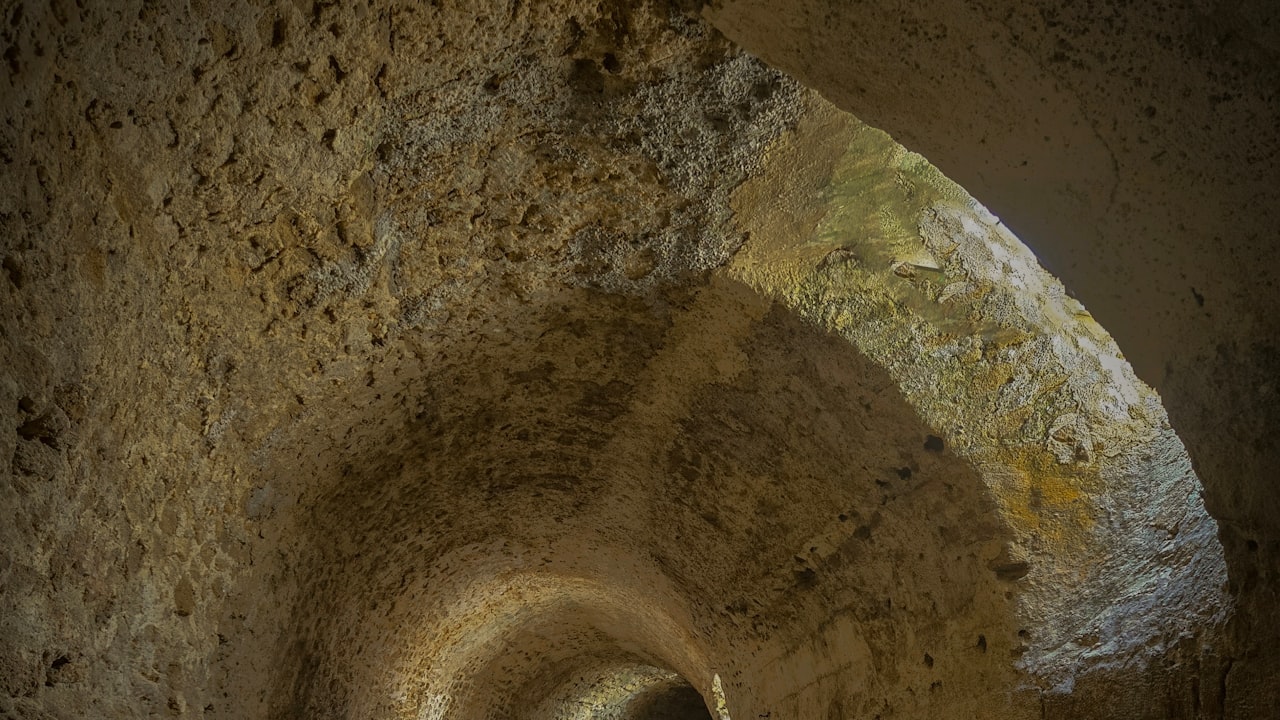
Most forgettable fights happen in a featureless box. Two ranks line up, everyone rolls attacks until one side falls over, and the room never comes up again. The fix is not a harder monster. It is a space that does something. Give the room hazards, height, a reason to move, and one effect that fires on its own, and players will describe the fight by where it happened rather than by what they killed.
Start with one hazard, not five
A hazard is any part of the room that can hurt, block, or reposition a creature. You do not need a deathtrap. You need one clear feature that changes how people stand.
- Fall risk. A pit, a ledge, a collapsed floor. Now shoving and grappling matter, and a caster who steps back for line of sight is taking a gamble.
- Damage zone. A brazier, spilled oil, a rune that flares. Standing in the wrong tile costs something, so the tile becomes worth fighting over.
- Moving danger. A swinging chain, a current, a rolling cart. It changes position each round, so the safe square keeps moving.
- Blocking terrain. Rubble, thick smoke, webbing. It breaks line of sight and forces melee and ranged fighters into different problems.
Name the hazard out loud the first round so the table can plan around it. A hazard nobody knows about is just a gotcha, and it teaches players to ignore the room instead of using it.
Add height so the map has a third dimension
Verticality is the cheapest way to make a fight feel tactical. The moment a square has a “high” and a “low,” positioning stops being decoration.
Height gives ranged attackers a reason to climb, gives melee a reason to knock people down, and gives the party a lever against a single big enemy. A balcony, a spiral stair, a stack of crates, a rope bridge, a cliff edge: any of these turns a flat brawl into a scramble for the better ground. Let players shove enemies off the high spot and let enemies do the same, and every round the map keeps being decided.
Give the fight a job beyond “kill everything”
The strongest single upgrade to any encounter is an objective that is not the enemy’s hit points. When there is a second thing to do, the party has to choose, and choice is where drama lives.
| Objective | What it forces | Clock |
|---|---|---|
| Protect something | Split the party, cover angles | Escort dies if left alone |
| Reach or hold a point | Push through the fight, not around it | Ritual completes, door seals |
| Destroy or disable | Spend actions off the enemy | Device charges each round |
| Escape the room | Fight while moving | Ceiling drops, water rises |
| Rescue a captive | Get someone out alive | Sacrifice at a set count |
Put a visible clock on the objective. A brazier filling with light, a chain winching a cage toward lava, a chant getting louder. The party should be able to read how many rounds they have left, so the pressure comes from a choice they can see rather than a number you hide.
Let the room take a turn
Give the space its own action on a fixed count each round, separate from any creature. The published games do this with location effects, and you can build the same idea generically without copying a single line of protected text. Because it fires on a timer, players can learn the pattern and work around it, which turns the room into a puzzle instead of a punishment.
Keep it to one line you can read aloud:
- On initiative count 20, loose stone falls in a random ten foot square. Anyone there makes a save or is knocked down.
- Every round, the tide rises one foot. Low ground floods by round four.
- At the end of each round, the braziers flare and the nearest creature to each one takes a small burn.
One effect is plenty. Two competing effects on different counts is a set piece.
Three arenas you can drop in tonight
- The flooded crypt. Waist deep water is difficult terrain and hides a drop into a lower chamber. Objective: reach the sarcophagus and pull the lever before the water rises over the party’s heads. Lair effect: the water climbs a foot a round.
- The forge gantry. Catwalks over a pit of molten metal, chains that swing on a timer. Objective: shove the enemy off the gantry or cut the chain holding the cage of prisoners. Lair effect: a chain sweeps one catwalk each round, forcing a save or a shove.
- The living grove. Roots that grapple, a canopy for high ground, spores that blind. Objective: burn the corrupted heart-tree at the center while it keeps summoning. Lair effect: on count 20, roots erupt in a random square and restrain whoever is standing there.
Notice that none of these change the enemy’s numbers. The threat comes from the room.
Put it together
Pick one hazard, one piece of height, one objective, and one lair effect, and you have a memorable fight before you have chosen a single monster. Set your difficulty first with the encounter builder, then read Balance a fight by feel, then check the math to tune how it plays, and Running your first boss fight as a new GM if the centerpiece is a single big villain. That is the whole point of Sinister 6: give your table a fight they will still be quoting three sessions later.